
Book of the Week – small events by w.f. owen
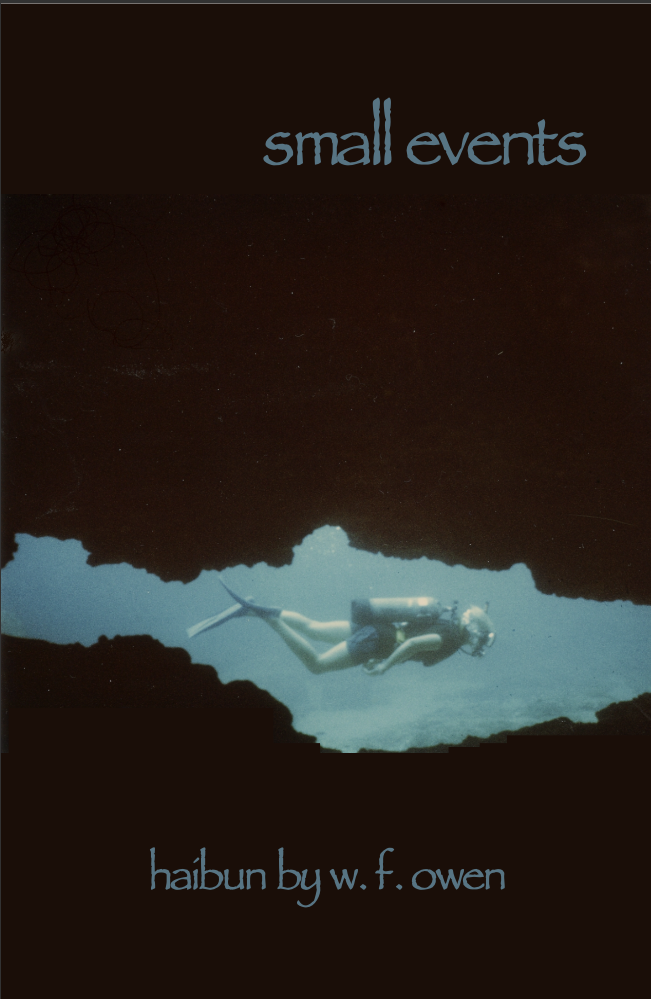
small events by w.f. owen is a collection of haibun that moves through memory in fragments rather than chronology. Owen, a Marine veteran and professor of communication, writes from a life that spans rural Texas childhood, military service, fatherhood, and loss. The book’s structure mirrors how memory actually behaves, with images surfacing, overlapping, and dissolving.
The opening piece, “small events,” establishes the method. Life is described as a hastily assembled photo album, “too many shots of some events, too few of others.” The closing haiku
boot camp album
counting the Marines
who died in Nam
tightens nostalgia into reckoning. The album becomes an archive of absence.
Owen’s haibun often starts with an anecdote and concludes with compression. In “clicks,” a squirrel hunt with an older mentor subtly shifts toward mortality. The haiku
afternoon shadows
with each click
the coffin lowers
recasts the mechanical click of a rifle bolt into something final. The lesson on hunting becomes a meditation on the passage of time.
Family threads run deeply through the book. In “oatmeal,” the narrator stirs glue-like porridge for a father slipping into dementia. The haiku
autumn deepens
he searches the pan
for my name
carries both season and forgetting in a single gesture. The father searching the pan mirrors the son’s search for memory.
Pause for a moment while reading these pieces. Do you find yourself leaning more into the prose or waiting for the haiku? Which feels like the real pivot-the narrative, or the final three lines?
Loss intensifies as the book moves forward. “dead pixel” incorporates an actual email from the narrator’s father detailing a cancer diagnosis. The prose remains factual, even bureaucratic, and then closes with:
moonless night
on the computer screen
a dead pixel
The metaphor is understated but devastating. One tiny absence in a field of light stands in for a life flickering out.
In “indian summer,” the narrator sits beside his dying father, holding his hand as oxygen tubing trails across the room. The haiku
Indian summer
a spent salmon
washes ashore
aligns the father’s body with natural cycles, not sentimentally, but inevitably.
Even public events enter through personal doors. In “happy birthday,” the announcement of JFK’s death coincides with the narrator’s sixteenth birthday. The cake waits while the television glows. History interrupts adolescence.
What distinguishes small events is restraint. The prose is direct, often conversational, sometimes breathless. The haiku do not explain; they refract. Over time, the repetition of military service, illness, fathers, sons, and friends creates cumulative weight.
The book suggests that a life is not defined by grand milestones, but by what lingers-an oxygen tube, a coin tossed in a grave, the hum of a machine. The small events remain.
You can read the entire book in the THF Digital Library. As you explore it, consider which “small event” stays with you longest-and why.
Do you have a full-length or chapbook-length book published in 2021 or earlier that you would like featured as a Book of the Week? Contact us for details. Haiku featured in the Book of the Week Archive are selected by the THF Digital Librarian, Vidya Premkumar and are used with permission.

This is a classic collection by a haibun master. Thanks for reminding us of the book’s availability in The Haiku Foundation’s Digital Library.