
Book of the Week – How to Haiku by Jim Kacian
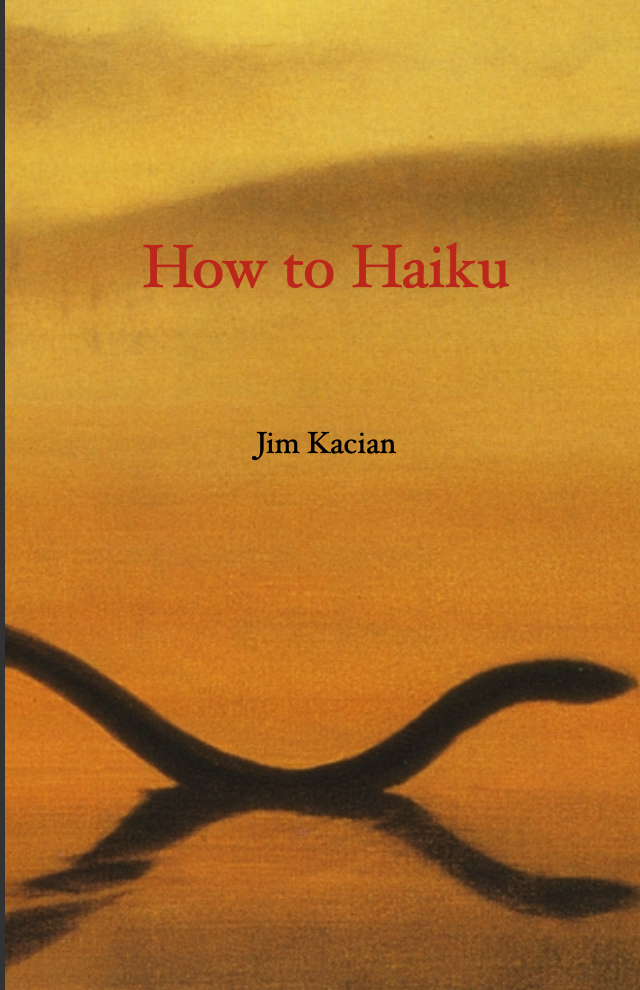
How to Haiku by Jim Kacian is not simply a collection of poems, but a thoughtful and thorough examination of haiku as a practice, a discipline, and a distinctive way of perceiving the world. Drawing on his extensive experience as an American poet, editor, and a key figure in contemporary English-language haiku, Kacian approaches the subject as both a seasoned practitioner and an insightful teacher. While the book is organised as a guide, its scope reaches far beyond basic instruction. It delves into the fundamental questions of what haiku is, how it functions, and why it remains relevant in the modern era.
The initial premise is deceptively straightforward. Haiku originates in everyday experience. Kacian explains how a moment interrupts our routine, when the ordinary suddenly presents itself in a new light.
“We have had a moment of insight,” he writes, “a seeing deeper into the workings of the world.”
For him, haiku is the form that enables these moments to be preserved and communicated without interpretation.
Throughout the book, Kacian emphasises that haiku is more than mere description. He warns against confusing simple listing with poetry, pointing out that simply stating what is “right here, right now” falls short. More is needed, namely, organisation, selection and resonance. Haiku must be crafted so the reader can relive the moment, not just be informed about it.
A key assertion of the book is that haiku is, above all, poetry. Kacian is unambiguous on this matter. Citing R. H. Blyth, he reminds readers that if haiku ever comes into conflict with anything else,
“poetry is the ultimate standard.”
This conviction permeates the sections on form, content, language, and technique. While rules are examined, they are never enforced merely for tradition’s sake. Instead, he contends, form must support the poem, not tradition.
A particularly valuable part of the book explores content. Kacian challenges the notion that haiku should be limited to pastoral or historical themes. For haiku to stay vibrant, he argues, it must reflect contemporary environments and experiences. He makes it clear that clinging to age-old subject matter is
“a certain way for haiku to become moribund, and even worse, dull.”
At the same time, the book avoids making haiku a form of confession. Kacian emphasises that haiku is not about self-expression or interior monologues, but rather about encounters with the world. The poet observes outwardly, letting images stand on their own and trusting readers to interpret them without imposed meaning.
Time and again, the book stresses the importance of insight. Each haiku must capture a moment of revelation, whether subtle or striking. Without this, it fails to be haiku. This realisation is not about novelty, but about renewal, a fresh way of perceiving the world, unclouded by routine or habit.
How to Haiku is thoughtful yet non-prescriptive, offering a vocabulary and framework for exploring haiku rather than formulas. More than a manual, it reflects careful attention to how poems capture lived experience.
You can read the entire book in the THF Digital Library. Please share a passage or idea from the book that shaped how you think about haiku.
Do you have a full or chapbook length book published in 2021 or earlier that you would like featured as a Book of the Week? Contact us for details. Haiku featured in the Book of the Week Archive are selected by the THF Digital Librarian, Vidya Premkumar, and are used with permission.

Comments (3)
Comments are closed.
Thanks, Jim, for sharing your insights with us lesser creatures.
I just read the whole book, cover to cover. So rewarding! I especially love this quote (page 91): “the real goal, after all, is not to write haiku, but to see more clearly, be in touch more deeply with where you live.”
Clear, cogent, and highly intelligent, this book was a seminal influence on me, and is the first one I recommend to newcomers.
Also one of its precursors: https://archive.blogs.harvard.edu/ethicalesq/first-thoughts-a-haiku-primer-by-jim-kacian/