
Book of the Week – Basho’s Haiku (Volume 1) by Toshiharu Oseko
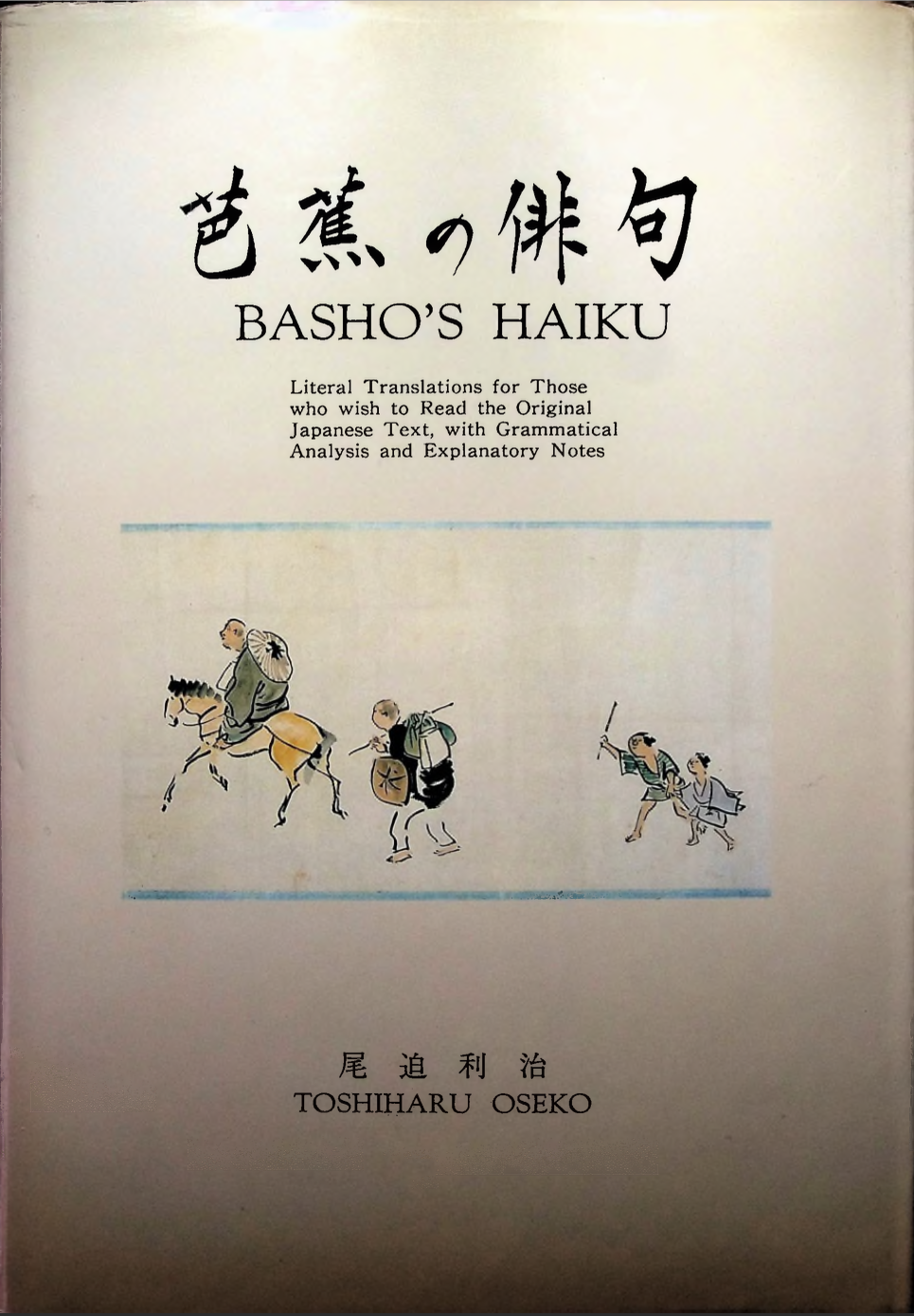
Toshiharu Oseko’s Basho’s Haiku: Literal Translations for Those Who Wish to Read the Original Japanese Text is an unusual and invaluable book. It is not a Basho anthology in the usual sense, but a pedagogical work that brings together Japanese texts, literal English translations, grammatical analysis, cultural context, and philosophical background. First published in 1990, it reflects Oseko’s dual expertise as a long-time haiku student and as an interpreter of Japanese literature for international readers.
The opening chapters clearly outline the project. Oseko states his goal: to translate Basho “as literally as possible,” avoiding polished or interpretive English in favour of a closer approximation to the Japanese. This is followed by a valuable overview of haiku’s development from hokku and renku, the role of linked verse, seasonal vocabulary, cut-words, and a detailed section on Japanese grammar for non-native readers.
When the book moves to Basho’s poems, each haiku is presented with Japanese characters, romaji, literal English, and explanatory notes. This structure allows readers to see how compression, kigo, and kire operate at the level of language rather than as abstract concepts. For example, from Basho’s travel period:
Tired from the journey,
I arrive at my lodgings:
Wisteria flowers!
In Japanese:
Kutabire-te
yado karu koro ya
fuji no hana
Oseko uses this poem to demonstrate how Basho pairs physical fatigue with sudden sensory uplift. The cut-word ya creates a hinge between arrival and recognition, and the wisteria (fuji) supplies a late-spring seasonal marker. Rather than describe the flowers, Basho records the emotional turn from exhaustion to shelter to beauty. Oseko’s note clarifies not only vocabulary and syntax, but also the travel context that produced the poem.
Another strength of the book is its handling of cultural knowledge. In haiku written while visiting farms or temples, Oseko explains agricultural tools, architectural features, religious terminology, and social customs. In travel poems from Oku no Hosomichi, geography and pilgrimage practices are introduced, turning scenic vignettes into records of real movement through Edo-period Japan.
The volume also includes concise essays on Basho’s aesthetics-fueki ryuko (“eternity and fashion”), karumi, and the influence of Chinese philosophy and Zen. These sections provide readers with vocabulary for thinking about Basho without reducing his work to mysticism or sentimentality.
Readers expecting polished English haiku may be startled by the literal renderings, but that is the point. Basho’s Haiku is a resource for learning, not a recital anthology. Its value lies in showing how Basho reads in Japanese, how his grammar works, and how his imagery functions before interpretation is layered on. For anyone studying haiku seriously, this remains one of the clearest guides available.
You can read the entire book in the THF Digital Library. If you explore it, tell us whether you read the translations first or the Japanese first and how that changed your experience.
Do you have a full or chapbook-length book published in 2021 or earlier that you would like featured as a Book of the Week? Haiku featured in the Book of the Week Archive are selected by the THF Digital Librarian, Vidya Premkumar and are used with permission.

Comments (1)
Comments are closed.
Thank you for the chance to read this wonderful book.