
Haiku for Healing – Haiga as a Healing Practice
Week 4 photo prompt
The week 4 photo prompt features the work of the well-known haiga poet, and editor, Lavana Kray. A photo prompt is posted each Monday until 16th March 2026. This is the second part of the Haiga as a Healing Practice feature of H4H, which looks to explore the healing potentials of haiga, a poetic form related to haiku, in dealing with illness, bereavement, estrangement, displacement, isolation and loneliness.
The experience and perspective of a poet is unique and we want to showcase this singular voice. Thus, the individual photo prompt has no title or accompanying text.
Take a cue from Lavana’s inspirational interview and consider how does the image distil the “residues” of your experience? Does it bring to mind the yearning in William Blake’s “winged life”* with its lightness of joy and release or does it evoke what Thomas Hardy described as the “the sorriness underlying the grandest things”?** Look inside and outside yourself Lavana urges and find that “something” that will best convey what you want to say.
In the Comments box below, please post no more than two original, unpublished haiku or senryu inspired by the photo on the theme of healing. In the spirit of empathy and connection we request that you comment on the other poems posted here.
Notes
* “Eternity”, William Blake (1757-1827)
** Notebook entry for 19 April 1885, Thomas Hardy (1840–1928)
Sonam Chhoki
If you have any questions about Haiku for Healing, please use the Haiku for Healing contact form on our Contact page.
Bios
Lavana Kray is from Romania. Over the years, she has won various prizes in haiku and tanka competitions. The World Haiku Association awarded her the title of Master Haiga Artist. Her work has appeared in many print and online publications, as well as in Haiga Exhibitions organized by the World Haiku Association in Japan and Italy. The Laval Literary Society from Canada awarded her the André-Jacob-Entrevous Prize 2023, for a literary text (haiku) combined with an artistic visual. She currently serves as haiga editor for the online journal of Japanese short forms, cattails. She has published five photo-haiku books, one tankart collection and a photo-haibun book.
She is owner-editor of https://ourbesthaiga.blogspot.com/
https://thehaikufoundation.org/thf-galleries-photo-haiku-of-lavana-kray/
Sonam Chhoki finds the Japanese short-form poetry resonates with her Tibetan Buddhist upbringing. She is inspired by her father, Sonam Gyamtsho, the architect of Bhutan’s non-monastic modern education and by her mother, Chhoden Jangmu, who taught her: “Being a girl doesn’t mean you can’t do anything.” She is the principal editor, and co-editor of haibun for the online journal of Japanese short forms, cattails.
Her chapbook of haibun, The Lure of the Threshold was published in May 2021. Mapping Absences, a collaboration of haibun, tan bun and tanka prose with Mike Montreuil was published in 2019. Another collaboration with Geethanjali Rajan: Unexpected Gift was published in November 2021. She organised a year-long email course in 2024 for The Haiku Foundation’s Haiku for Parkinson’s project.
Read past Haiku for Healing posts here.
THF strives to maintain a safe and friendly environment for our readers and site participants. Participation in our offerings assumes respectful and appropriate behavior of all parties. We reserve the right to refuse service to anyone, for any reason, at any time.
If you see something you feel may violate our Code of Conduct, please report it to the appropriate moderator or the President here.

her days like stacked wood
loosen
closely watched
Incredibly accurate. A controlled sense of security and stability combined with self-imposed limitations because you know someone is watching you.
Great interpretation of the subject of my photo. Thank you, Buffi.
I love the idea of your haiku.
Let’s keep the rule short, long, short verse, to be as close as possible to the spirit of haiku.
Hi Buffy,
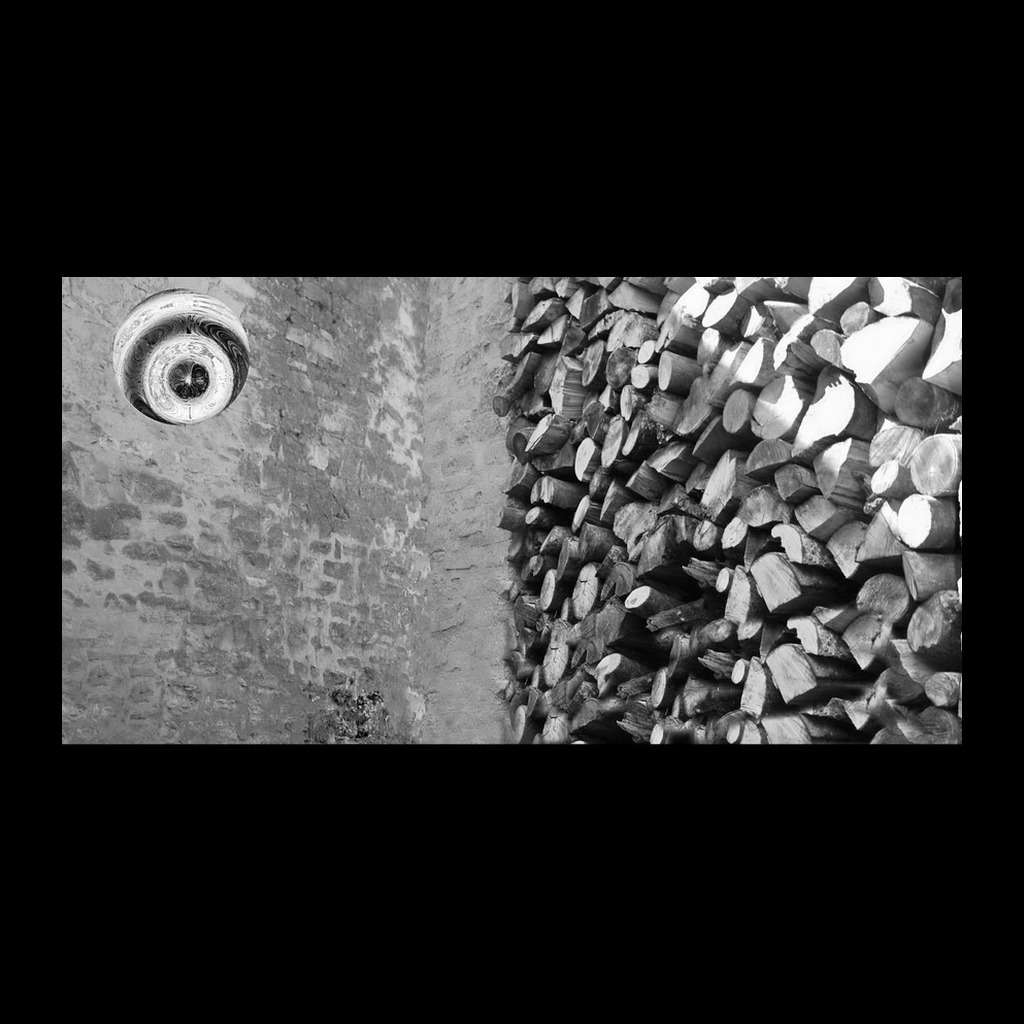
You’ve used the images in Lavana’s photo: the vigilant eye and the wood stack to create a poignant moment.
One gets a sense of a fragile status quo and I like how you allow room for the reader to imagine a couple of possible scenarios:
1. Under the vigilant eye/care suggested in L3: “closely watched” she (her) is able to overcome (perhaps albeit briefly) whatever difficulties/inhibitions she has. One imagines she relaxes to enjoy such days.
2. The vigilant carer keeps a watchful eye on her who is frail and possibly struggling (stacked wood loosening). This occurs on a regular basis (“her days”).
Your use of the images and words to suggest such an open range of possibilities is inspired.
Sonam
alone
but for
the residual
left in sleep
which dream
etched her smile
Incredibly interesting paths of association. It makes you want to follow them further.
Hi Jharna,
Welcome to this haiku for healing feature. Your response to Lavana’s photo creates a sense of solace and refuge. A lovely idea and response.
Sonam
log burner
watchful eyes
still hold a spark
This is a delicate poem. I love it.
Lavana
woodpile,
which will become the welcome arch –
healthy oasis tour
woodpile
a healthy insect village ~
biodiversity
stapel boomstammen,
voor de welkomstboog ~
gezonde oase tocht
houtstapel
een gezond insectendorp ~
biodiversiteit
stack of tree trunks,
which will become the welcome arch –
healthy oasis tour
woodpile
a healthy insect village ~
biodiversity
stapel boomstammen,
voor de welkomstboog ~
gezonde oase tocht
houtstapel
een gezond insectendorp ~
biodiversiteit
Hi Guido de Pelsmaker,
Having read your poems in response to Lavana’s photo, l sense a recurring theme: how viral the wildlife and the ecosystem are.
I like the image of the pile of tree trunks being an archway, a kind of a welcome entry for the wildlife to explore and seek shelter.
“insect village” is a lovely image and thought.
Please feel welcome to also share your thoughts on the poems posted by other poets here.
Sonam
Hi Guido de Pelsmaeker,
Apologies for the typo in the spelling of your title/ name.
Also, l meant how “vital” wildlife and the ecosystem are. ( not viral as it came out in my previous post).
Sonam
beach carnival
the headstand pose
of a beatle fan
This is quite an unexpected response to Lavana’s image.
Thank you for sharing this poem.
Sonam
the slow spin
of the eye of Jupiter
this healing
teetering
on uneven ground
you keep watch
Very apt. The absence of obstacles lulls us to sleep. Your interpretation resonates with me.
I’m so glad, Urszula. Your comments are so welcome. Thank you.
Hi, Eavonka!
Thank you for sharing with us your beautiful haiku.
Dear Lavana,
No, thank you. Your images are always so inspiring!
Thank you. It is very kind of you.
Hi Eavonka,
Two ingenious responses to Lavana’s wonderful photo. There’s an enheartening sense in both poems.
Sonam
Thank you so much, Sonam. I am really trying to respond to the photos with hopes for healing, and I’m glad you felt that.
the path be
smooth or rough
where is the middle
ground
prying into
nooks and crannies
what business
of yours
Evocative questions, Dinah.
thank you Eavonka, good to see you!
Hi Dinah,
I like how you’ve caught that sense of unease in your responses to Lavana’s photo.
Sonam
thank you Sonam,
on first seeing the photo, I turned away from it, several viewings later I figured out what was making me do that
ancestor’s property
mother’s eyes
on the roll
forest kingdom
the elephants park
their security
Hi Lakshmi,
A lovely touch of humour in the first poem. There’s a touch of affection and makes it a relatable scenario,
The second poem reminds me of la lumber/timber yeard where elephants transport the timber. A great twist to Lavana’s photo.
Sonam
Thank you so much Sonam!!
Both are facts!!
exposed to the sun
the stacked assurance
for a warm winter
A beautifully captured sense of security, although the intention may be different.
Beste Paul Callus
Mooi ingezoemd.
De zon die het hout droogt en alzo meewerkt in het finaal proces van huisverwarming.
daily structure
cements lasting faith
in the process
Patience – we lack it so much, and you understand it and use it creatively.
from hurled insults
he builds
a wall
a stone wall
without mortar
fake bravado
Your interpretation and imagination are admirable.
Congratulations, Christopher!
Hi Christopher,
Your first poem is quite a memorable one. The second poem seems to play on a similar theme. “fake bravdo” is a good contrast to the “stone wall”.
Sonam
slash pile–
the nurse log
tends the broken
*
cord of wood…
ready to burn the pain
to warm the winter
*
…to burn the pain… What a sensation !
Thank you, Laurie.
Hi Laurie,
How inspiring that even though it’s fallen/cut, the “nurse log” nurtures. The image of a warm fire soothing pain also plays on the idea of nurturing.
Thank you for these uplifting responses to Lavana’s photo.
Sonam
killed in sleep
pryes
at dawn
A powerful poem. “At dawn” deepens the pain.
We were so close to avoiding disaster.
We didn’t open our eyes in time to see who (or what) was threatening us.
Thank you, Urszula for your perceptive reading. You’re right we are indeed unware or/and unprepared for the unthinkable which still happens.
Sonam
making a choice
the eye of providence
watching over you
emptiness or
orderly chaos?
and winter ending
Hi Urszula,
Thank you for repsonsding to this week’s photo promt. Lavana’s image seems to have two great poems.
“the eye of providence” ever present and thus the courage to exercise one’s free will and judgement is ever more meaningful and powerful.
I like how you allude to how we struggle to make sense of change. Even with “winter ending” what comes after can feel out of kilter in the beginning.
Sonam
Hi Sonam,
Thank you for your insightful analysis. This photo offers so many possibilities. The eye, though not the eye itself, is the first thing that catches the eye.
Urszula
endless wars
in each other’s eyes
specks and logs
Each of us carries a burden, hoping that someone will see it in our eyes and we will lift it together.
Hi Richard,
“endless wars” certainly convey senselessness of constrant strife, suspicion and hostility. “specks and logs” capture this bristling attitude well.
Sonam
a line of stones
under black pines
fading twilight
If it weren’t for the stones, the walk would be pleasant.
Indeed Urszula, the path gathers more stones as we travel along it.
Thank you for commenting. J
Hi John,
Does the “fading twilight” when darkness becomes more pervasive emphasise the starkness of the “black pines” evoking encumbrance or impediment in “line of stones?
A poem that gives one much to ponder.
Sonam
Hi Sonam – sorry it so long to reply!!
The poem is about death. The stones can be ‘stepping stones’ through life or ‘gravestones’. The ‘fading twilight’ refers to the later stages in a life. The ‘black pines’ are pointing away from Earth and represent darkness and leaving. Alternatively, it’s about something internal… Thanks for the comments.
peace to the left
thorns to the right
– finding balance
It would be nice to have a choice if everything weren’t so tightly interconnected.
Hi Katherine,
“finding “balance” has a certain poignancy here given the coflict of voices : “peace to the left” and “thorns to the right”.
Quite a topical write given the current predicament.
Sonam
🙏
Finding balance is essential and difficult to achieve.
This is a nice poem, Katherine.
🙏