
Book of the Week: the old tin roof
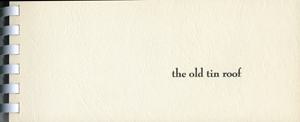
Marlene Mountain was the doyenne of English-language haiku. She burst upon the scene with the publication of this iconic chapbook, self-published in 1976, which contains many of her early classics, which made it an excellent volume with which to inaugurate our Book of the Week Feature in 2013, and now to begin our look back at the first dozen years of Book of the Week.
You can read the entire book in the THF Digital Library.
with rain i hear the old tin roof
spring evening he calls louder for the milk cow
drone of my dulcimer down the road a revival
river moving dawn with it
beneath leaf mold stone cool stone
the old milk cow comes in long before dusk
gosling following its neck to the bug
at dusk hot water from the hose
The reason we are reprising our early Book of the Week offerings is because we are currently without a Digital Librarian. The Digital Librarian creates new Book of the Week posts for the Foundation, in addition to other tasks. Ideally, s/he has librarian skills, but it’s not absolutely necessary. Perhaps you would have an interest in serving the haiku community, and the Foundation, in this way? If so, contact us for more information.

Comments (9)
Comments are closed.
Well here it is…the best and most influential book of haiku in the past 50 years. I cannot recommend this book enough. This and Bashō are the two haikai works I return to time and again.
I always enjoy MM’s work because it’s never boring.
The poems in this book and in moment / moment moments changed my life, especially “peacock.” Marlene is a marvelous talent and a dear friend.
great collection. been looking for a copy of this… thanks for posting it!
Truly a treat to see these. I especially like the concrete/visual pieces — :-)
I love this poet’s work.
We just updated this post with a link to an online version of the “the old tin roof.”
Just great. What a service to haiku poets . . . past and present.
wonderful. what a treat to be able to read these early works of marlene’s.
as fresh and as current as when they were written.