
haiku::photo 3 — rhythm

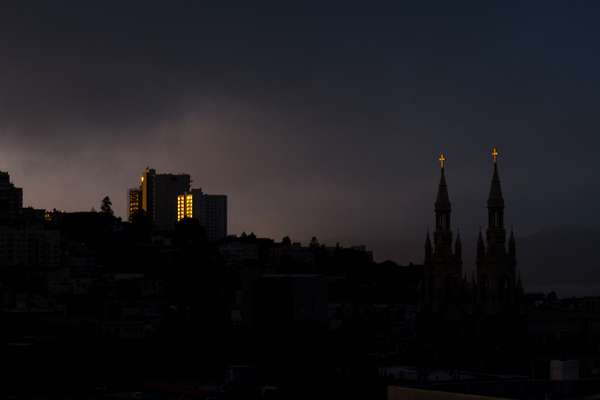
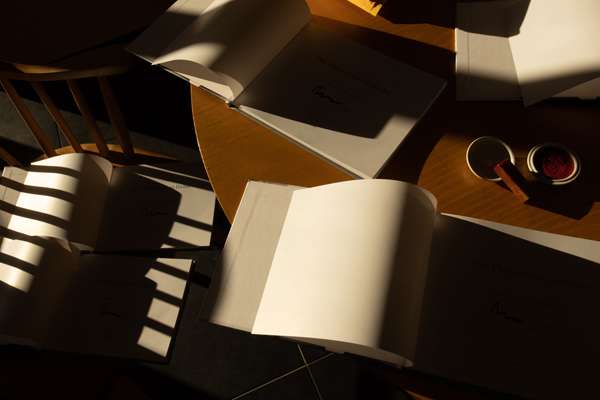
The Haiku Foundation welcomes you to haiku::photo.
M. H. Rubin says
Ah simplicity! You all nicely captured this feeling and have made my voting (and yours) exceptionally challenging. Haiku are simple — 17 sounds — and as they say, they do a lot with little.
So here’s the lesson: “simple” is perhaps the easiest attribute to embrace in a photo — shoot a subject on a neutral background, or in high contrast, and presto, it’s visually simple. Where it gets more challenging is getting the simple uncluttered image when the things you’re shooting are part of the dynamic world. You can use the optical features of a camera — short depth of field, slow shutter speeds, extremes of contrast and lighting — to pull it off, and along with the right framing and composition, you can increase the simplicity in a scene.
When it’s a haiku::photo, the simplicity shouldn’t feel forced, or unnatural, or over the top. Haiku are of everyday life experiences, little authentic moments. When I’m gauging the submissions, I have to exclude, then, those photos that feel constructed — arranged, or heavily post processed for some effect — or where it’s just showing me something without letting me, the viewer, participate and think. So while there are many many beautiful photos here, I’m leaning into those that “read” like good haiku as well as interesting ways that simplicity has been managed.
Again, I push away from images where I feel like I’ve seen it before — animals, reflections, silhouettes — it’s not that they aren’t beautiful, but they aren’t novel or personal or unique.
Simple alone isn’t enough — it still has to be haiku in its nature. So it’s easy to show a photo that’s visually simple and I believe the group’s selections reflect that. What many of those are not is a moment of everyday life, not so obvious or on the nose, and often such a common trope that it would hard to see it as unique to the photographer. Image #4, for instance, your pick as the simplest (and a lovely photo), is a photo I’ve seen dozens of times (and shot a few myself) — it’s simple and structured, but it’s a bit on the nose, and mostly, it doesn’t feel like a unique scene from daily life. #5 similarly is beautifully simple, but without the story I want to experience in a haiku. It’s just a little too clean. #20 is also wonderfully simple, but feels too contrived, too perfect a scene, and also a scene I’ve seen.
One of the things to think about is the degree you will allow the ‘artificial’ or contrived. A haiku won’t be. It’s something noticed and captured, but with purpose and structure. Some are a little too perfect, too conceived and not just “noticed.”
My picks:

Dan Campbell, “rooster”
I think this feels nicely structured, and lets the depth and fog simplify what might have been a pretty cluttered scene. If anything, the rooster and composition is almost too-perfect, and objects too-structured, and it could feel manufactured — the perfect side shot of the rooster, the empty space behind him, etc. maybe the part I like the most is the barbed wire and the thorns—they’re not just background noise, they’re important and cool.
One thing to remember, like the rooster shot last month (that I also wondered whether it was a statue, or staged in some way), that it really doesn’t matter if something WAS staged or post-produced into the final form, it’s only if it FEELS that way. We often strive for perfection in our photos — perfect focus, perfect composition, perfect moment — but too perfect is a disconnect. This is on the line, and after sitting with it for a few days, I like it.

Beverly Jay, “puppy”
This is a relatively unusual shot of this puppy, it’s sweet, it’s simple, it takes a moment to absorb… it’s not over the top structured, but I feel purpose in the composition. A puppy photo can easily be more object than moment, more obvious; but it’s nice to feel that nudged into the unique personal moment. The more I sit with it the more I feel a story of a puppy snuggled up with its mom (or the like). There’s more to it, more to ponder. The scene is very simple, there’s not a lot to pull our eye away from the subject, it doesn’t feel cluttered or busy but at the same time, it’s not empty — it’s just appropriately neutral. If anything, it’s a bit on the nose (snicker), but the overall quiet delight works.

Jeff Nelson, “sand”
This one feel more organic, perhaps, than the other two. It’s a moment I can relate to, a small moment, and it’s visually simple. The wind and blowing sand are a small moment that I could feel. It took a second to feel it. Honestly, it’s not as traditionally beautiful a photo or composition — but as a haiku it has grown on me. It feels personal.

Keith Evetts, “Trombones”
This is a more interesting version of the simplicity from a silhouette — there’s some interesting highlights in the dark, the composition is structured by not rigid, and just enough imperfection— but mostly, it feels dynamic, a moment captured, and unique.

Olga Leskiw-Suzuki, “Autumn Gift”
This is a lovely photo, elegantly simple and formal, just a hint of transience in the bird flying by — but it’s maybe a little too perfect, and a little too manufactured (it feels like the saturation has been removed everywhere but the fruit, which is a nice effect, but also feels contrived in a way I find inconsistent with haiku. I like this image and it’s certainly simple, but a hair outside of my haiku threshold.
How did our voters see it?

Wanda Amos, “reeds” (20 points)

Valerie Green, “leaf-circle” (19 points)

Dan Campbell, “shadowman” (13 points)
Our Next Focus: photographic rhythm
What we’re looking for: photos that display visual rhythm
Hopefully you’re all seeing how the forms of haiku work in an image. When I give the assignment, it is not to capture that theme and nothing else, but rather, to lean into that attribute of a haiku to make sure it’s addressed. As always, I’m aiming for seeing the attributes of haiku reflected, even when I announce a topic that is only one of those attributes. Remember haiku is more genre than form — and while people can debate it, you have pretty wide latitude to make your own kind of haiku, obviously same with a photo.
So in this assignment let’s concentrate on rhythm (and I do NOT mean a photo of a drum — I’m talking about the rhythm in the structure. You all know how rhythmic, almost musical, a haiku should feel. In the haiku::photo we aim for a pair of beats, the first thing you see, the strong beat, the two haiku lines, the thing you think the haiku is about, and then a moment later, the second weaker beat, the one line, the thing that shifts your thinking a bit. An easy way to do this is that there are two objects in frame such that you notice the first, and then when you notice the second, you feel the leap. Not just any two things, and not an obvious pairing, but something a little surprising. Another way is when the thing in frame is a bit obscure, but a moment later you get it — “huh? Oh!!” — but it should have a bit of delight in that discovery.
But don’t forget in total it always should be haiku, so all the attention to simplicity and formality et al need to be elements. And also a small scene from everyday life, expressing kigo.
So try to make some haiku::photos that particularly demonstrate your nuanced sense of the delightful rhythms in a haiku.
Good luck, and have fun.
— M. H. Rubin


How to participate:
First, view Rubin’s site. Once your feel you have a grasp of the principles, take some photos that align with this month’s theme. Select your best, and submit them below by midnight January 31. Voting runs February 3 – 10. Results, commentary and the new topic will be announced here on troutswirl on February 15. Good luck!
Note: This isn’t haiga! There should be no text attached to your photos. What we are looking for is, precisely, haiku::photo!
haiku::photo SUBMIT
Curated by internationally renowned photographer M. H. Rubin, haiku::photo is an opportunity to combine two areas of artistic knowledge. Anyone with a camera can explore the application of haiku principles to the craft of photography., first by viewing Rubin’s site, then by posting their best efforts related to our monthly theme here on the THF site. The result is a visual kukai, and results will be housed in the haiku::photo archive.

Comments (9)
Comments are closed.
In the commentary for Dan Campbell’s “Outhouse”, there is a mention of fruit in color and a bird. Was the commentary meant for a different image?
Yes, #49 of the tree.
Good catch. Thank you.
All interesting. Dan’s rooster topped my list, to which I applied a haikuist’s test: does it suggest a haiku? Is there juxtaposition?
The rooster is associated with crowing at sunup. Yet here we have one set against fog (or mist). What is it to do…. A thorny problem (note the barbed wire). Plenty of material for a nature-based haiku with a little gentle haikai humor or irony. As well as being a simple image with the rooster on a post (==on the spot). As with haiku, there is little you could take away from this scene except perhaps for the tree, without removing some of the meanings implied above.
I can say similar for some other of the photos (notably Dan’s other two, but indeed all of our host’s selections), that there is material for a verse. But it doesn’t come so easily to mind for several others, particularly images that are simplified to the extent that they are focused on just one object with barely any juxtaposition. What does the team think?
I think that any photo that supplies material for verse is being subservient to a haiku that already exist. I personally prefer a photo that stands proudly on its own. My apologies to the photographer, but the koi in a reflected sky reminds me of so many haiku that it diminishes its worth to me.
Kinda like a vegan hamburger. Why is that vegan hamburger beholden to a meaty burger. Just be a vegan burger if you’re confident in how you taste.
The ladder on the church steps, speaks a haiku/senryu language but it’s not any one that I’ve ever read. (and I have read many).
Just my 2 ¢ worth.
I have a question regarding post-processing guidelines for entries. Are submissions expected to remain largely standard, or is there flexibility for more creative or interpretive processing? Is there a defined limit on how far post-processing can go?
There is no guideline, per se.
But when a photo feels manipulated, altered in some way (and it really doesn’t matter in what way), perhaps aside from being monochromatic, it makes it a lesser haiku — where we strive for presenting without trickery or artifice. It’s a fuzzy line. It’s a feeling sometimes.
Thank you Mr. Rubin for your thoughtful explanation — I appreciate the clarity and the spirit behind it.
I find the comparison to haiku particularly interesting. For me, haiku has always allowed for restraint and interpretation: a careful distillation of experience, where what is left out can be as expressive as what remains. In that sense, I tend to see subtle post-processing not as trickery, but as a way of refining the moment, of enhancing it, of providing the “ah ha” moment a moment of attentiveness — much like choosing a single word over another in a poem.
I fully understand the importance of avoiding artifice, and I respect that “feeling” plays a role in this judgment. I simply wanted to share that my own approach to processing aims to quiet the image — closer to editing than embellishing, if that distinction makes sense.
Thank you again for taking the time to explain your perspective.
Of the photos praised here, this one also made my list. It has the power to grab attention.
Think the submission dates might be wrong in the guidelines?